There's been a lot of buzz on the documentary and independent movie scene about a film that is taking on our food industry. It's called Food Inc. and I had the pleasure of being able to see it a few days ago. If you haven't heard of it, check out the trailer here. (Does that first line sound familiar?)
The first thing that struck me about the film regards an issue I discuss pretty regularly which is the corn phenomenon. Americans eat literally tons and tons of corn each year without even realizing it. It is used to make high fructose corn syrup, pectin, maltodextrin, and a host of other harmful and unnatural ingredients created in a science lab. The same can be said about soybeans. It is found in all sorts of technological products such as soybean oil, lecithin, and many others. You still think fat is making you fat? Our processed foods contain incredibly unhealthy amounts of these chemicals and products that you are consuming. Add to that, the majority of these food products contain wheat flours and sugar and you begin to see just why we are an obese nation.
The upsetting part to me is that this is what you are being told to eat. The USDA's food pyramid is a prime example of the propaganda put out by the corn and soybean industry. Another way you are being told (that you may not realize) is by the prices in the supermarket. Processed food products that contain these government subsidized ingredients (wheat, corn, soy, etc.) cost much less than a healthy cut of beef or a bell pepper. Not to mention, the density of calories per gram in this cheaper unhealthy food is much greater making it a clear choice in the eyes of someone who only has a few bills to keep their stomach full this week. The poor in this nation are struggling over whether to spend money on healthy food or medicine to continue to live (that they might not have needed in the first place had healthy food been available to them). The 99 cent double cheeseburger at McDonald's or the $1.50 organic apple at the farmer's market?
Though my interests lie mainly in what you eat, there is something to be said for where it comes from as well. The movie goes on to show how a corn and soybean based diet is making our cattle and livestock just as sick as we are and the pathetic conditions they are raised in.
Food Inc. is a disturbing look at the food industry and how it is controlled by a handful of large corporations that you must see. If you haven't yet, please look for it in a theater close to home.
14 August 2009

12 August 2009
Intro to Almond Flour (w/ Blueberry Muffin Recipe)
I hope this post finds you all well and I trust you've tried a recipe or two.
Let's talk for a little bit about almond flour.
You might be thinking I've got to give up muffins, cakes, ice cream, cookies, and all that other stuff that makes life so wonderful if I want to be healthy. It's just not worth it.
And you would be exactly right. I'm not telling you to give these pleasures of life up, but I am asking you to consider making them in a little bit different way than you may be used to up to this point. We know that the wheat flour in most of these items is bad for us because it is all carbohydrate, turns almost instantly to sugar, spikes our insulin, and causes all those dreaded "diseases of civilization." Right?
Enter almond flour. It's made from nothing but ground blanched almonds making it a completely natural alternative to processed wheat flour. It also has a few carbohydrates, but plenty of healthy fat to help tame insulin's response. Unfortunately, almond flour can't simply be substituted for wheat flour in each and every instance, but with a little experimenting and research, you can make just about anything. It is becoming more and more widely available and has been a staple in French baking for years. If you're local chain doesn't have it, try a health food store or online.
Here's something to start you off with (in addition to the awesome pancakes). This is a blueberry muffin recipe I took and made my own using a little guidance from elanaspantry.com.
Blueberry Muffins
2 C almond flour
3 large eggs
1/3 C applesauce (unsweetened, no preservatives, etc.)
1/2 C agave (or honey)
1/4 tsp. sea salt
1/2 tsp. baking powder
1/2 vanilla bean
1 C blueberries (frozen, unsweetened)
Whisk eggs, applesauce, salt, baking powder, and agave until uniform in consistency. Slowly add almond flour and continue to whisk. Slice vanilla bean, scrape out out the pod, and whisk that into the mixture as well. After a batter has formed, fold in blueberries with a spatula. Pour the batter into a muffin tin greased thoroughly with coconut oil. You should get 6 to 8 muffins. Place in a 350 degree oven for 25 to 35 minutes, or until a toothpick comes out clean.
Let's talk for a little bit about almond flour.
You might be thinking I've got to give up muffins, cakes, ice cream, cookies, and all that other stuff that makes life so wonderful if I want to be healthy. It's just not worth it.
And you would be exactly right. I'm not telling you to give these pleasures of life up, but I am asking you to consider making them in a little bit different way than you may be used to up to this point. We know that the wheat flour in most of these items is bad for us because it is all carbohydrate, turns almost instantly to sugar, spikes our insulin, and causes all those dreaded "diseases of civilization." Right?
Enter almond flour. It's made from nothing but ground blanched almonds making it a completely natural alternative to processed wheat flour. It also has a few carbohydrates, but plenty of healthy fat to help tame insulin's response. Unfortunately, almond flour can't simply be substituted for wheat flour in each and every instance, but with a little experimenting and research, you can make just about anything. It is becoming more and more widely available and has been a staple in French baking for years. If you're local chain doesn't have it, try a health food store or online.
Here's something to start you off with (in addition to the awesome pancakes). This is a blueberry muffin recipe I took and made my own using a little guidance from elanaspantry.com.

Blueberry Muffins
2 C almond flour
3 large eggs
1/3 C applesauce (unsweetened, no preservatives, etc.)
1/2 C agave (or honey)
1/4 tsp. sea salt
1/2 tsp. baking powder
1/2 vanilla bean
1 C blueberries (frozen, unsweetened)
Whisk eggs, applesauce, salt, baking powder, and agave until uniform in consistency. Slowly add almond flour and continue to whisk. Slice vanilla bean, scrape out out the pod, and whisk that into the mixture as well. After a batter has formed, fold in blueberries with a spatula. Pour the batter into a muffin tin greased thoroughly with coconut oil. You should get 6 to 8 muffins. Place in a 350 degree oven for 25 to 35 minutes, or until a toothpick comes out clean.
10 August 2009
Curry Chicken Salad & Cobb Salad
So now you've got some ideas for breakfast. Here's some things to try for lunch. Keep in mind that both of these options are easy to pack and take with you to work or school. Remember to click the headings for photographs of the finished product!
Curry Chicken Salad
4-6oz. chicken breast, cooked
1 tblsp. mayonnaise
1 tblsp. brown mustard
1/4 C grapes, chopped
1/2 oz. walnuts, chopped
1/4 tblsp. parsley
1 tblsp. curry powder
Chop chicken breast and mix in mustard, mayo, parsley, and curry powder. Then gently mix in grapes and walnuts. Serve on half a bell pepper. Also try it as a sandwich with this fantastic bread recipe from elanaspantry.com. Pay careful attention to the products I have linked to. The mayonnaise has been selected because it is free of harmful soybean oil and the mustard contains only a few natural ingredients.
Bacon & Avocado Salad
4-6 oz. chicken breast, cooked
3 oz. mixed salad greens
1/2 oz. walnuts, chopped
1/2 avocado, diced
1 oz. pineapple, chopped
1 tblsp. red onion, chopped
1/4 C grapes, chopped
2 slices of bacon, cooked
Chop chicken breast and bacon. In a large bowl, place salad greens and top with the remaining ingredients.
Try this great homemade salad dressing (free of nasty soy oils and corn syrups) on your Bacon & Avocado salad.
Balsamic Dressing
1 C virgin olive oil
1/2 C balsamic vinegar
2 tblsp. agave nectar or honey
1 tblsp. parsley
1 tblsp. basil
2 tblsp. oregano
1 tblsp. brown mustard
pinch of sea salt and fresh ground pepper
Combine all ingredients in a medium sized mason jar and shake well.

Curry Chicken Salad
4-6oz. chicken breast, cooked
1 tblsp. mayonnaise
1 tblsp. brown mustard
1/4 C grapes, chopped
1/2 oz. walnuts, chopped
1/4 tblsp. parsley
1 tblsp. curry powder
Chop chicken breast and mix in mustard, mayo, parsley, and curry powder. Then gently mix in grapes and walnuts. Serve on half a bell pepper. Also try it as a sandwich with this fantastic bread recipe from elanaspantry.com. Pay careful attention to the products I have linked to. The mayonnaise has been selected because it is free of harmful soybean oil and the mustard contains only a few natural ingredients.
Bacon & Avocado Salad

4-6 oz. chicken breast, cooked
3 oz. mixed salad greens
1/2 oz. walnuts, chopped
1/2 avocado, diced
1 oz. pineapple, chopped
1 tblsp. red onion, chopped
1/4 C grapes, chopped
2 slices of bacon, cooked
Chop chicken breast and bacon. In a large bowl, place salad greens and top with the remaining ingredients.
Try this great homemade salad dressing (free of nasty soy oils and corn syrups) on your Bacon & Avocado salad.
Balsamic Dressing
1 C virgin olive oil
1/2 C balsamic vinegar
2 tblsp. agave nectar or honey
1 tblsp. parsley
1 tblsp. basil
2 tblsp. oregano
1 tblsp. brown mustard
pinch of sea salt and fresh ground pepper
Combine all ingredients in a medium sized mason jar and shake well.
08 August 2009
Spicy Frittata
So you've been reading for a week or two now and are now ready to get your life on track. What can you eat? Here's a couple of recipes for breakfast. I'll be following these up with some lunch and dinner options as well. Be sure to click the headings for pictures of the finished products.
Spicy Frittata
This is what you'll need:
4 large eggs
2 slices of uncured, nitrite-free bacon
1 jalapeno pepper
1/2 red bell pepper
1/2 small avocado
1/4 C chopped white onion
First, set your oven to broil. Pan fry the bacon until almost thoroughly cooked. Remove and let cool on some paper towels. Pour out the bacon grease into a glass container to be disposed of later, but do not wipe the pan clean. We still want a little grease in our pan. Chop the red pepper, onion, and jalapenos to your liking and saute in the pan with the bacon fat. In about 5 minutes, when the vegetables begin to get a nice char, add the bacon and chopped avocado. Continue to saute for about 2 minutes. Crack and whisk eggs, then pour into the pan with the vegetables and bacon. Make sure to get the egg around and through everything. Allow the eggs to cook a bit and then transfer to the oven. Broil for about 5 minutes, or until the top is nice and brown. Top with your favorite natural, un-food-product-y salsa. (I like Jack's.) Play around with the number of eggs for your personal needs.
Primal Pancakes
This is one of my favorite breakfasts. It comes to you from Mark over at marksdailyapple.com. This is also a great introduction to almond flour (which I'll be covering more later). Now, even though these pancakes fit into the natural way of eating and are quite healthy, I'd still consider them a once a week treat rather than mixing them up every morning. Here's what you'll need:
1/2 C almond flour
2 large eggs
1 ripe banana
1/4 tsp. cinnamon
Whisk eggs in a small mixing bowl. Add almond flour and cinnamon and continue to mix. Cut the banana into manageable pieces and mash into the almond flour and egg mixture. Continue to whisk until mixture becomes a relatively uniform consistency. Grease a griddle with a bit of coconut oil and pour batter into three medium sized pancakes. When the bubbles in the middle of the pancakes begin to break, it's time to flip. Stack them up on a plate and top them with honey. You'll love them!
Spicy Frittata

This is what you'll need:
4 large eggs
2 slices of uncured, nitrite-free bacon
1 jalapeno pepper
1/2 red bell pepper
1/2 small avocado
1/4 C chopped white onion
First, set your oven to broil. Pan fry the bacon until almost thoroughly cooked. Remove and let cool on some paper towels. Pour out the bacon grease into a glass container to be disposed of later, but do not wipe the pan clean. We still want a little grease in our pan. Chop the red pepper, onion, and jalapenos to your liking and saute in the pan with the bacon fat. In about 5 minutes, when the vegetables begin to get a nice char, add the bacon and chopped avocado. Continue to saute for about 2 minutes. Crack and whisk eggs, then pour into the pan with the vegetables and bacon. Make sure to get the egg around and through everything. Allow the eggs to cook a bit and then transfer to the oven. Broil for about 5 minutes, or until the top is nice and brown. Top with your favorite natural, un-food-product-y salsa. (I like Jack's.) Play around with the number of eggs for your personal needs.
Primal Pancakes
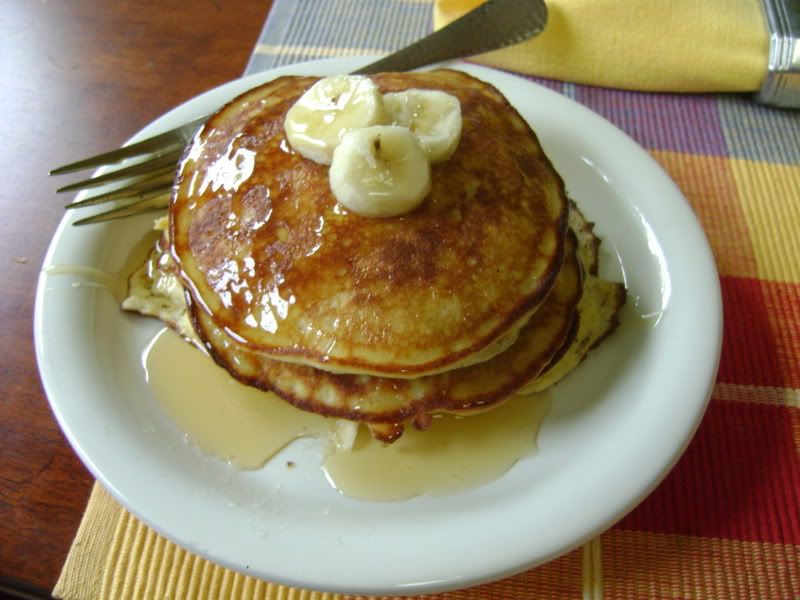
This is one of my favorite breakfasts. It comes to you from Mark over at marksdailyapple.com. This is also a great introduction to almond flour (which I'll be covering more later). Now, even though these pancakes fit into the natural way of eating and are quite healthy, I'd still consider them a once a week treat rather than mixing them up every morning. Here's what you'll need:
1/2 C almond flour
2 large eggs
1 ripe banana
1/4 tsp. cinnamon
Whisk eggs in a small mixing bowl. Add almond flour and cinnamon and continue to mix. Cut the banana into manageable pieces and mash into the almond flour and egg mixture. Continue to whisk until mixture becomes a relatively uniform consistency. Grease a griddle with a bit of coconut oil and pour batter into three medium sized pancakes. When the bubbles in the middle of the pancakes begin to break, it's time to flip. Stack them up on a plate and top them with honey. You'll love them!
06 August 2009
All about fat
Polyunsaturated, transaturated, omega-3, monounsaturated, saturated... It's hard to keep up with what's what sometimes. Here's a brief overview of all the kinds of fats, what they do, and where to find them.
1. Monounsaturated: These are your plant-derived fats. I'm sure you're familiar with olive oil and its often touted heart health benefits. Well, that's because of the monounsaturated fats. All nuts (walnuts, almonds, etc.), avocados (as well as its oil), and some plant oils contain high levels of this type of fat. Studies show that they help lower your bad cholesterol levels and raise the healthy ones.
2. Polyunsaturated: These fats are mainly found in fish and grains, but are also in small quantities in animal meats (largely depending on the diet of the animal you are consuming). This group can be broken down into two separate entities: omega-3 and omega-6 fatty acids. Our neanderthal brothers and sisters probably consumed these two fats in a roughly 1:1 ratio.
With a typical Western diet made up of tons of sugar and grains, this ratio can often be as high as 20:1 (omega-6:omega-3). All this omega-6 comes from the plant oils (peanut, corn, soybean, safflower, etc.) that are used in our processed food products. I'm sure you've read about the benefits of a fish oil supplement somewhere recently. These supplements attempt to return this ratio back to a more natural balance. Omega-6 fats are not unhealthy fats necessarily, but they can be quite harmful if your ratio is too far out of line. An omega-6 dominated body can lead to clogged arteries, arthritis in the joints, and cause insulin resistance. Though eating natural and whole foods will help get this ratio down quite a bit, I still continue to recommend a good fish oil supplement.
3. Saturated: I know what you are thinking. Avoid these right? Wrong. Saturated fat unfortunately has quite an unnecessary stigma attached to it. This is mostly found in animal products, but can be found in a few plant sources (chocolate and coconut immediately come to mind). Though saturated fat is known to increase LDL cholesterol slightly (the bad kind), it also increases HDL (the healthy kind). In addition, it helps support growth and healing by telling the body to increase production of testosterone. Females: Do not be afraid of this. You aren't going to look like the Hulk if you eat a little animal fat. Testosterone helps you turn fat into muscle, keeps your skin healthy and young, and prevents osteoporosis and other diseases.*
I'm still not suggesting that saturated fat is the most healthy fat of all, but 20-30g per day is a perfectly natural and healthy amount to be consuming.
4. Transaturated: Now this is the one you should be concerned with. In the 1950's, scientists learned how to to hydrogenate plant oils creating margarine as a "healthy" alternative to butter. Interestingly enough, by hydrogenating plant oils proved to be much worse than the saturated fat they were trying to replace.
Hydrogenation is a process that turns oil into a solid form at room temperature (ex. margarine). It is used in many processed foods as a way to extend shelf life and improve consistency. This man-made food product raises the bad cholesterol and lowers the good by significant amounts, clog arteries, and yet again... cause insulin resistance.
*(SOURCE)
04 August 2009
More on milk
So I still haven't convinced you on the milk, eh?
Your body doesn't require milk after you've passed infancy and it surely doesn't require it from a cow. What about my vitamin D? Don't worry. The vegetables and fish you eat will are good sources vitamin D and our bodies can make it on it's own by using energy from the sun absorbed through the skin. If you are outside for around 15 or 20 minutes a day, you're getting plenty. Calcium? Green, leafy vegetables also provide enough calcium, though not quite as much as recommended by the government. Why? A high carbohydrate diet leads to an acidic pH in your body. The body saps calcium from your bones to compensate for this loss in an attempt to maintain a neutral pH. Not eating 300g of sugar a day? Great. You have no need for a whole lot of extra calcium. Worried about osteoporosis or arthritis? Don't eat 300g of sugar each day.
Now, if you insist on drinking milk, please do not drink skim milk. It is easily one of the most widely consumed food products out there. What exactly is wrong with it? Sure, it's got some protein, but I have two complaints with this worthless beverage.
1. It has no fat. That's right. And that was the whole reason that you thought it was better for you right? Well, we've already learned that sugar spikes blood glucose levels (and therefore insulin) and that fat helps to lessen the amount of insulin needed to keep blood sugar at normal levels. The lactose in milk is in fact a sugar that causes insulin to be released just the same as any other sugar. In addition, as we grow older, our bodies begin to slow production of lactase enzymes, which breakdown the lactose sugar into a usable form.
2. It's fortified. The fat is where the vitamins are. When you skim off all the fat, you skim off the vitamin D and other minerals naturally found in the milk. This process is much akin to refining wheat flour. In a similar fashion, we try to pump the vitamins we took out back in in a process commonly referred to as enriching. It's been proven time and time again that adding these vitamins back in to foods is not nearly as beneficial to the body as leaving them there in the first place (and sometimes worse!).
So basically, skim milk is a sugary, processed, skimmed, and fortified food product (a lot of things we should avoid) and if you insist on drinking milk (which is silly), then please drink whole.
02 August 2009
Think neanderthal
Many of you may still be scratching your head asking why I'm telling you to avoid bread (including whole grain) and milk which are in fact two foods we've been eating for ages and consider healthy.
Humans have been around for over 2 million years in some form or another constantly evolving and adapting to our environments and growing more and more intelligent. Since we first appeared, we ate whatever the land provided for us. We hunted our protein and fat sources and foraged for our carbohydrates.
Then about 10,000 years ago, we started to settle down. We learned to build houses for shelter and govern ourselves, but we also learned how to farm. This is what most historians refer to as the agricultural revolution. It no doubt changed our lives for the better, but this was also the time when the domestication of animals and farming of mass amounts of grain began being produced (coinciding with mass amounts consumed). This wasn't all bad, though I'm sure that many suffered some ill effects of gluten intolerance and mild hyperglycema because of a higher percentage of calories from carbs that was quite a shock to our systems.
It wasn't until around 100 years ago that we've been consuming mass amounts of refined and processed soy, corn, and wheat products. It was only around 50 years ago that we discovered how to hydrogenate oil and create transaturated fats. This was when the real issues started.
Let's do some math. If we've been around for 2 million years and farming grains for 10,000 years, we've only been eating them in mass quantities for... one half of one percent of our existence (0.5%)... or not a lot. If we've been around for 2 million years and only started eating processed food products for 100 years, that's only 0.005%... or even less.
So what am I saying? You were made to eat like this guy... not this guy.
*Please check out the new content added to my July 29th posting "What not to eat." *
Humans have been around for over 2 million years in some form or another constantly evolving and adapting to our environments and growing more and more intelligent. Since we first appeared, we ate whatever the land provided for us. We hunted our protein and fat sources and foraged for our carbohydrates.
Then about 10,000 years ago, we started to settle down. We learned to build houses for shelter and govern ourselves, but we also learned how to farm. This is what most historians refer to as the agricultural revolution. It no doubt changed our lives for the better, but this was also the time when the domestication of animals and farming of mass amounts of grain began being produced (coinciding with mass amounts consumed). This wasn't all bad, though I'm sure that many suffered some ill effects of gluten intolerance and mild hyperglycema because of a higher percentage of calories from carbs that was quite a shock to our systems.
It wasn't until around 100 years ago that we've been consuming mass amounts of refined and processed soy, corn, and wheat products. It was only around 50 years ago that we discovered how to hydrogenate oil and create transaturated fats. This was when the real issues started.
Let's do some math. If we've been around for 2 million years and farming grains for 10,000 years, we've only been eating them in mass quantities for... one half of one percent of our existence (0.5%)... or not a lot. If we've been around for 2 million years and only started eating processed food products for 100 years, that's only 0.005%... or even less.
So what am I saying? You were made to eat like this guy... not this guy.


*Please check out the new content added to my July 29th posting "What not to eat." *
Subscribe to:
Posts (Atom)